
17
UP to HEAVEN
A world full of UNBRIDLED beauty.
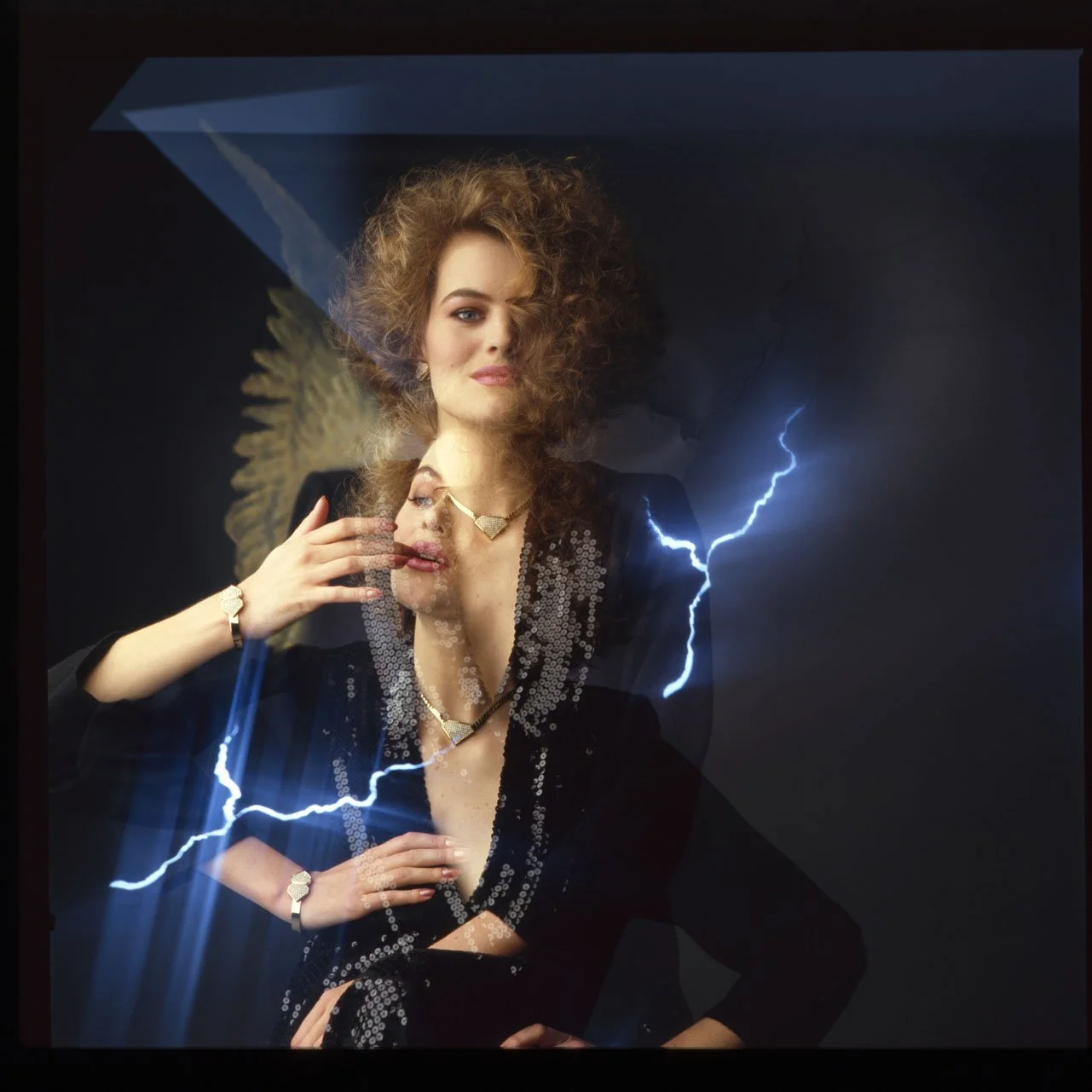
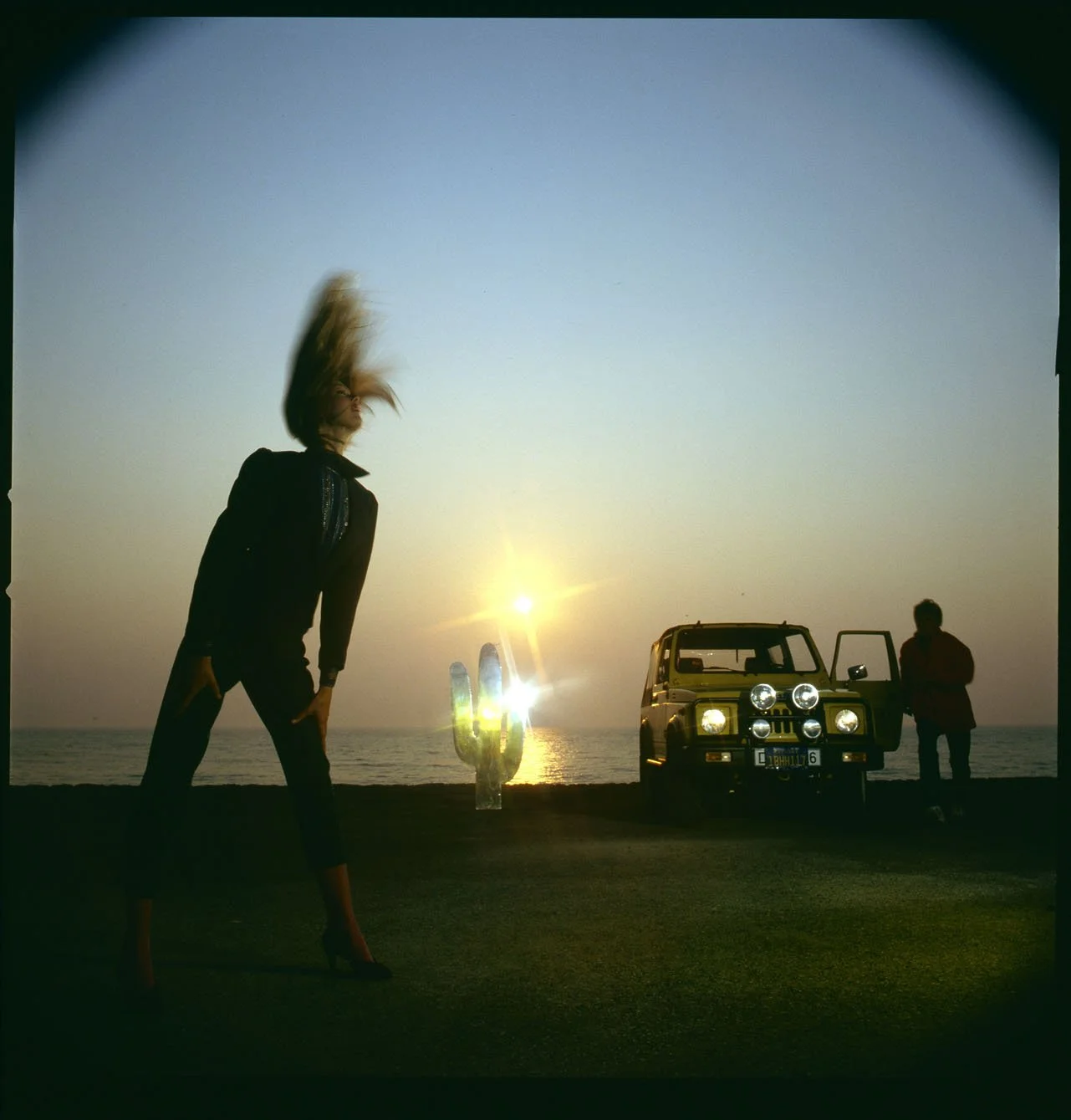
Ulrich Pracht’s images invariably embody the very essence of what makes photography so fascinating: its capacity to lift us out of our everyday routines, transport us to distant lands, and whisk us away into a world brimming with unbridled beauty and wonder. At times, he is drawn to recreating world-renowned masterpieces within his photographs. Thus, his oeuvre features homages spanning the centuries—from the Renaissance to Surrealism, from Sandro Botticelli to the avant-gardist Salvador Dalí. At other times, however, he delights in casting aside conventional modes of perception to forge new paths entirely his own. The photographer tirelessly sought out technical innovations to capture the elusive magic of the moment within his subjects. With this fresh and unconstrained approach, he was consistently a step ahead of his time. This is vividly demonstrated by his 3D works for television—a medium he single-handedly elevated into an art form, pushing far beyond the visual conventions of the TV landscape of that era. The world of photography encompasses a vast array of styles and techniques; while some photographers focus exclusively on capturing moments in sharp, crystal-clear images, Ulrich Pracht harnesses every stylistic device photography places at his disposal to tell the stories embedded within his pictures: frontal views, high-angle shots, low-angle shots, oblique perspectives—his unique vision cannot be confined to a single point of view. It is as if he were gazing through a kaleidoscope with his camera; much like that optical toy—in which colorful shards of glass, through multiple reflections, coalesce into geometric patterns—ever-shifting images constantly assemble before his eyes. Whether he employs motion blur—a feature found in no other visual medium—to realize his vision, or whether he works with overlaps and transparencies, or plays with surface textures and reflections, his photographic oeuvre is governed solely by his own artistic concept and his own visual language. Pracht also skillfully harnesses the pictorial qualities inherent in the "photo-graphic" medium: since photographs—for all their spatial illusion—remain fundamentally two-dimensional, they can, in turn, depict only the surface of things. In his work, graphically intriguing structures emerge as a central motif; his ethereal images are renowned for their intricate details and sumptuous textures, with flowing fabrics and semi-transparent materials frequently appearing throughout his oeuvre.
17.1
ANGEL ART
Half angel, half magician.
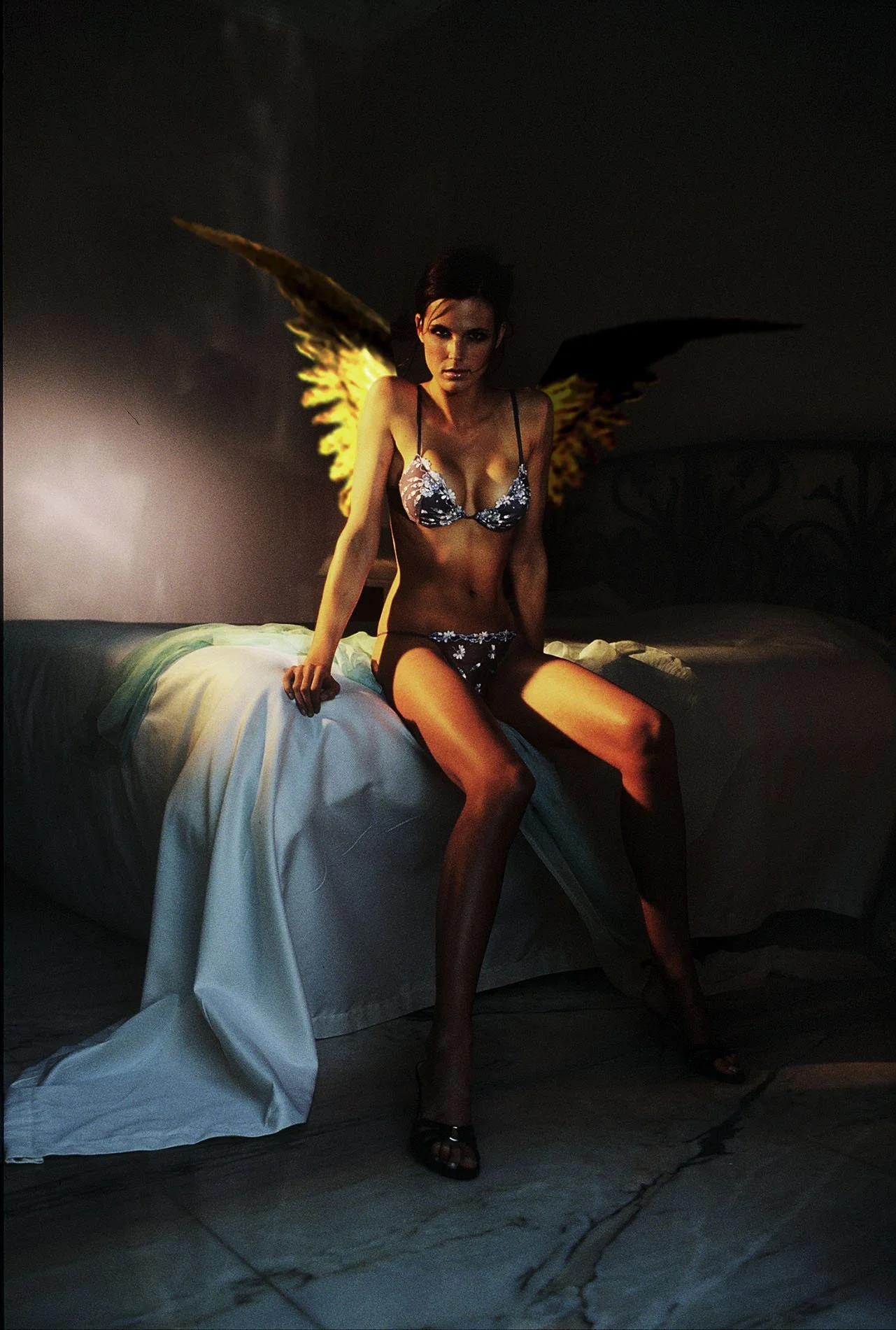
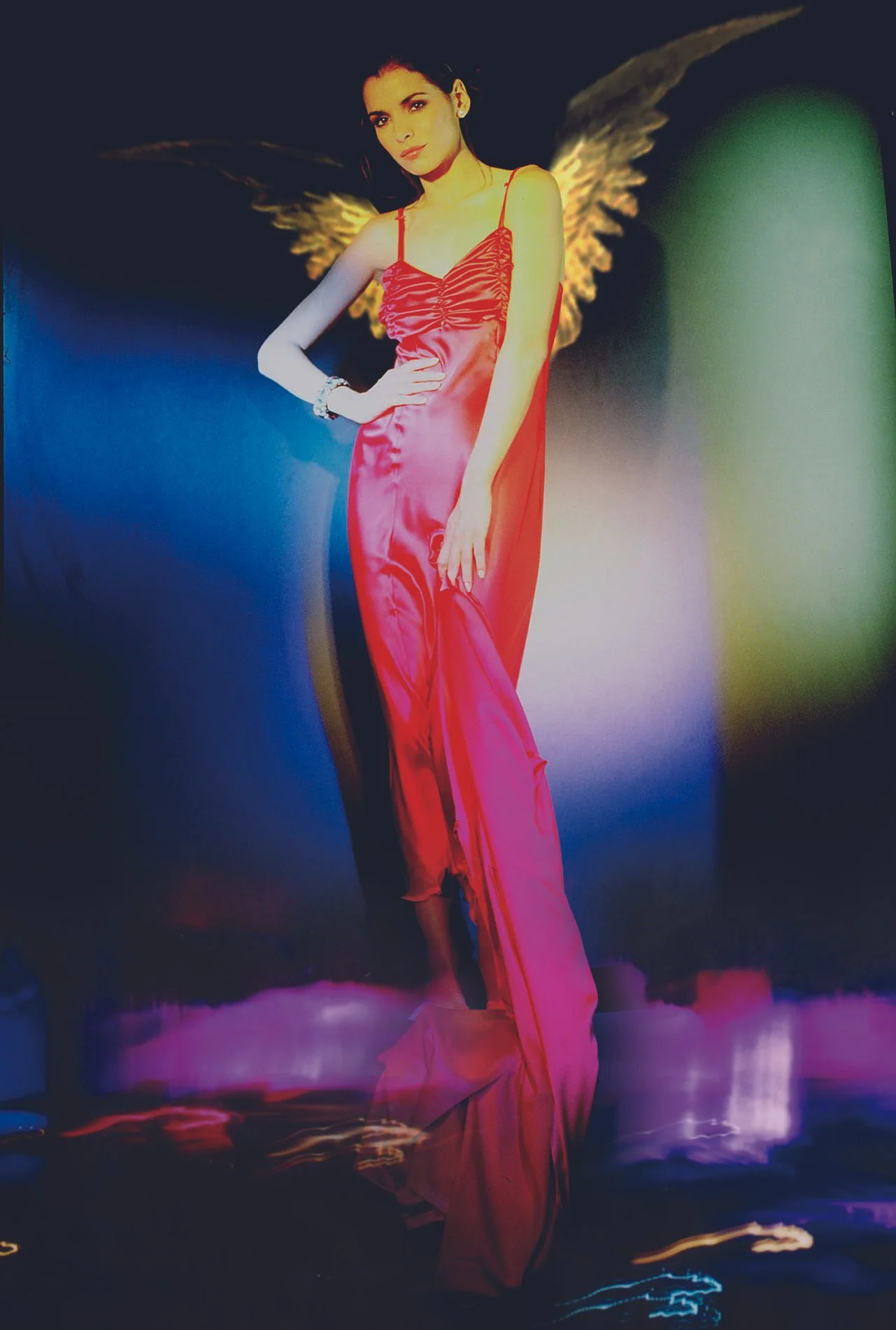
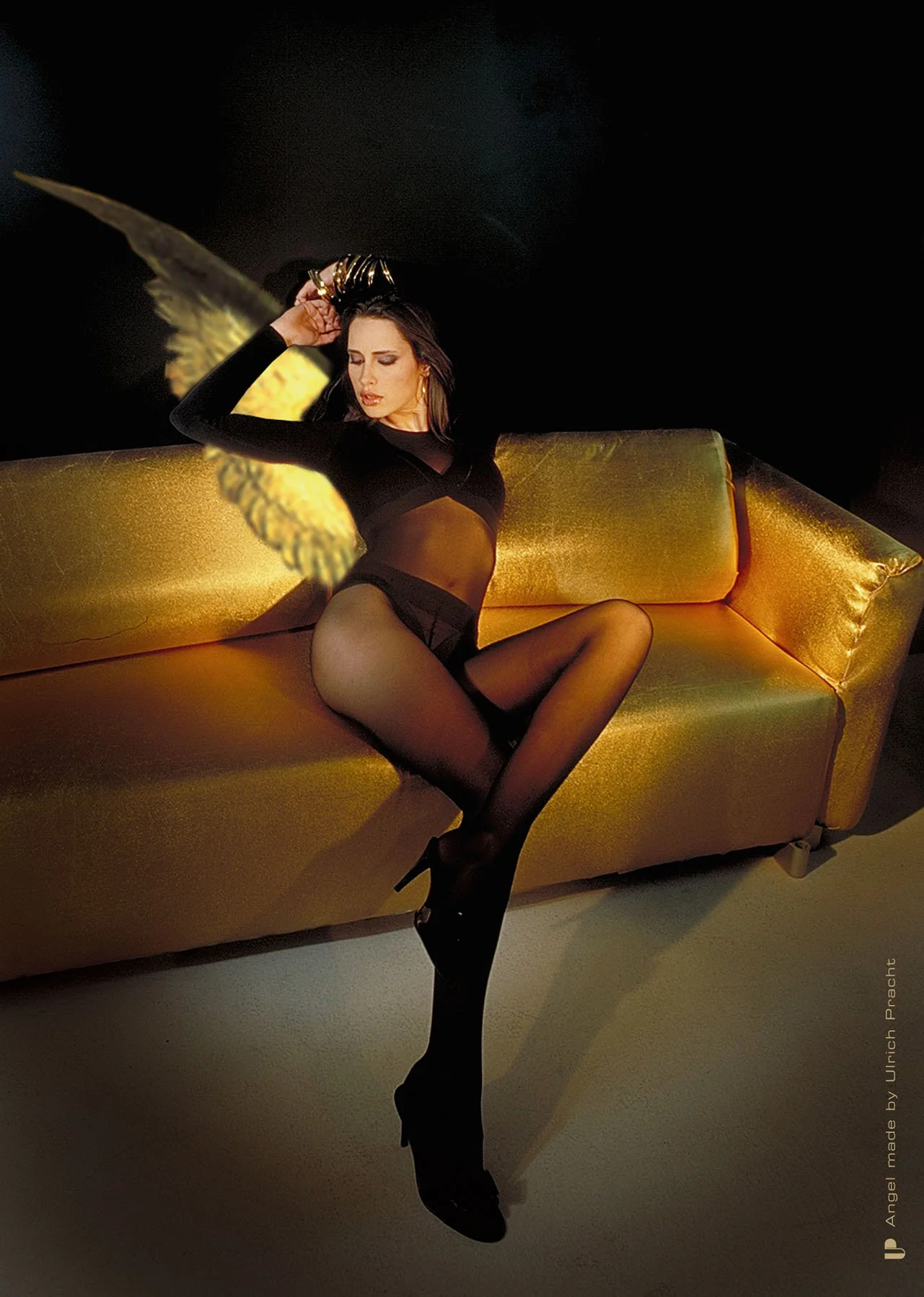
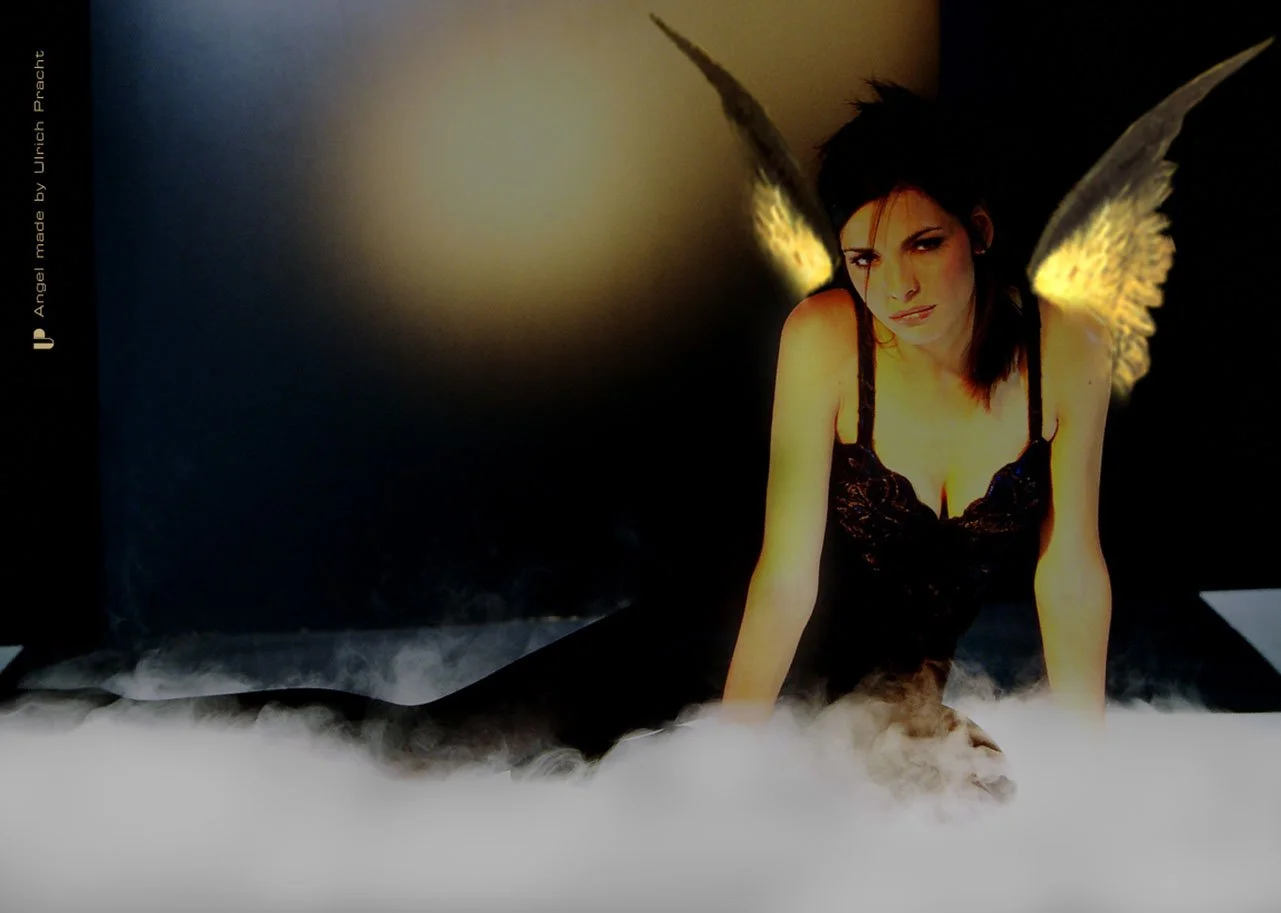
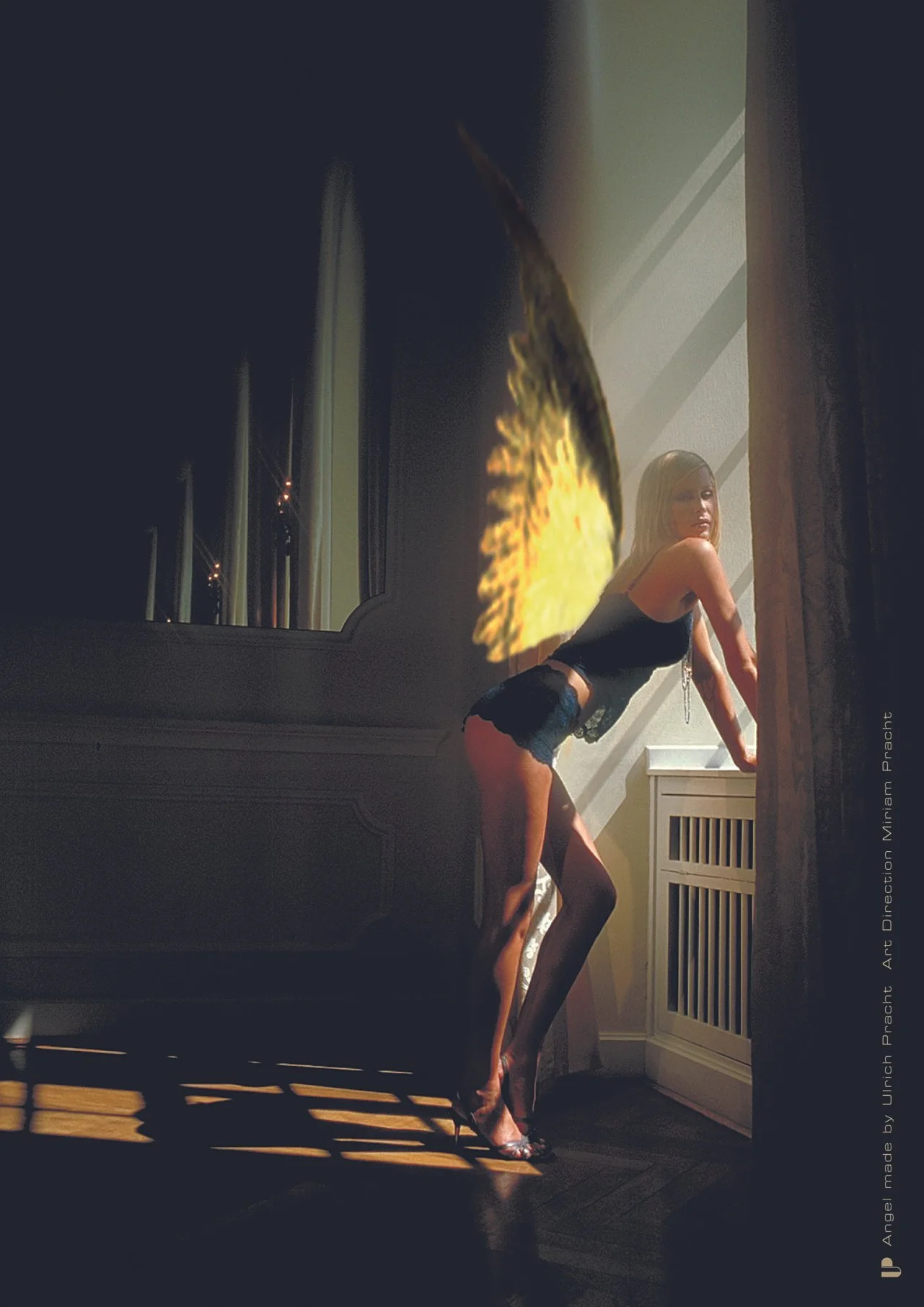
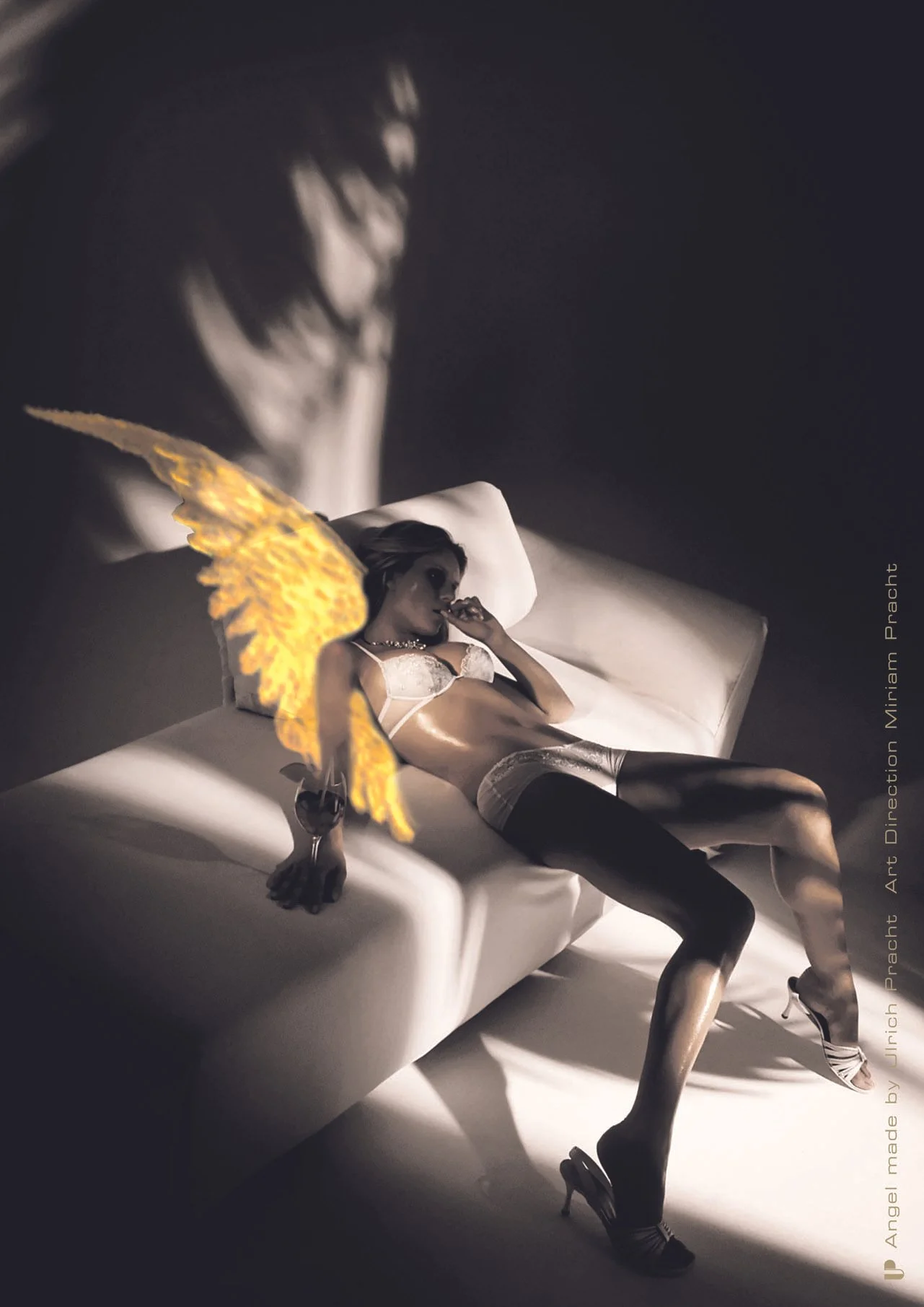
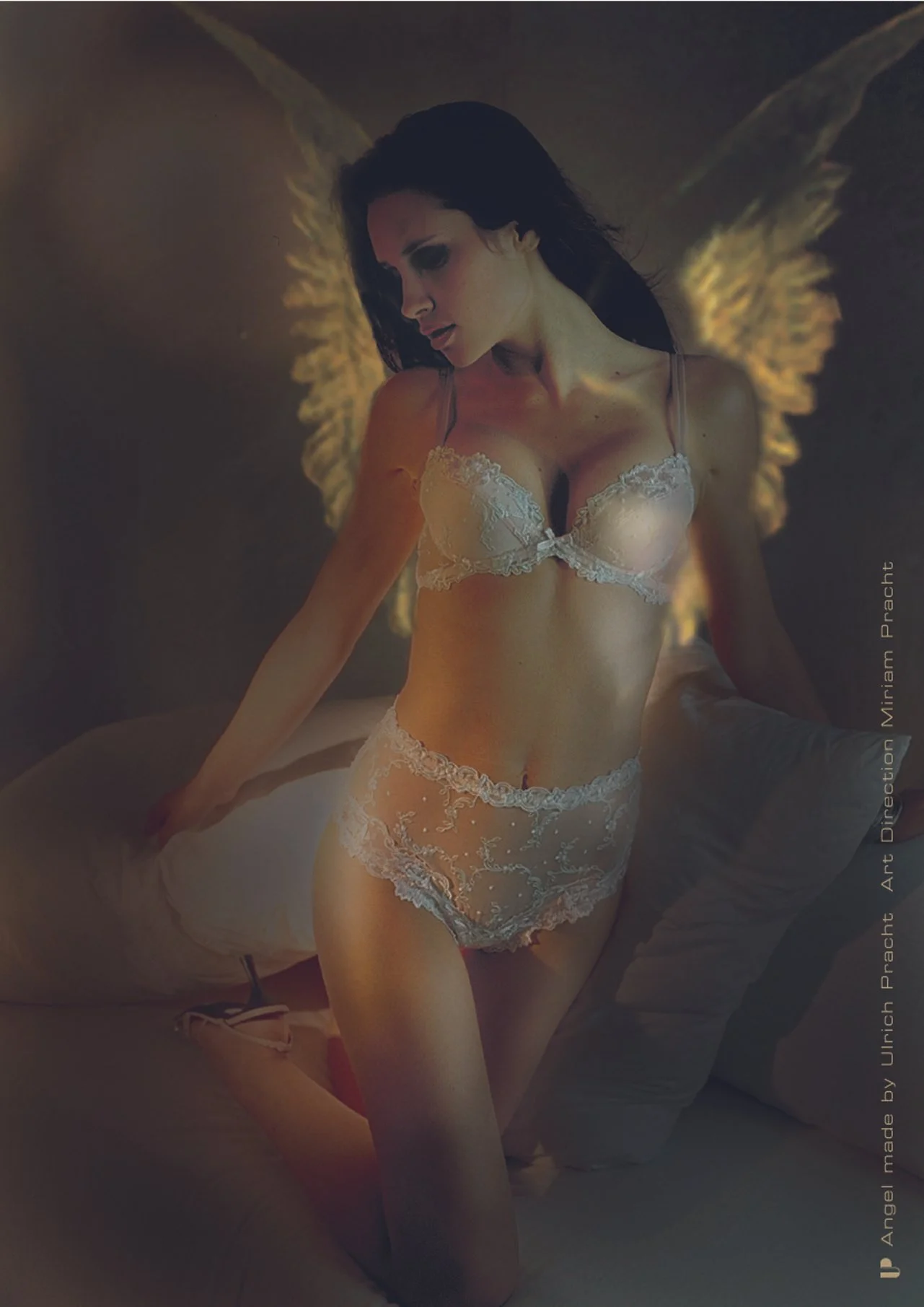
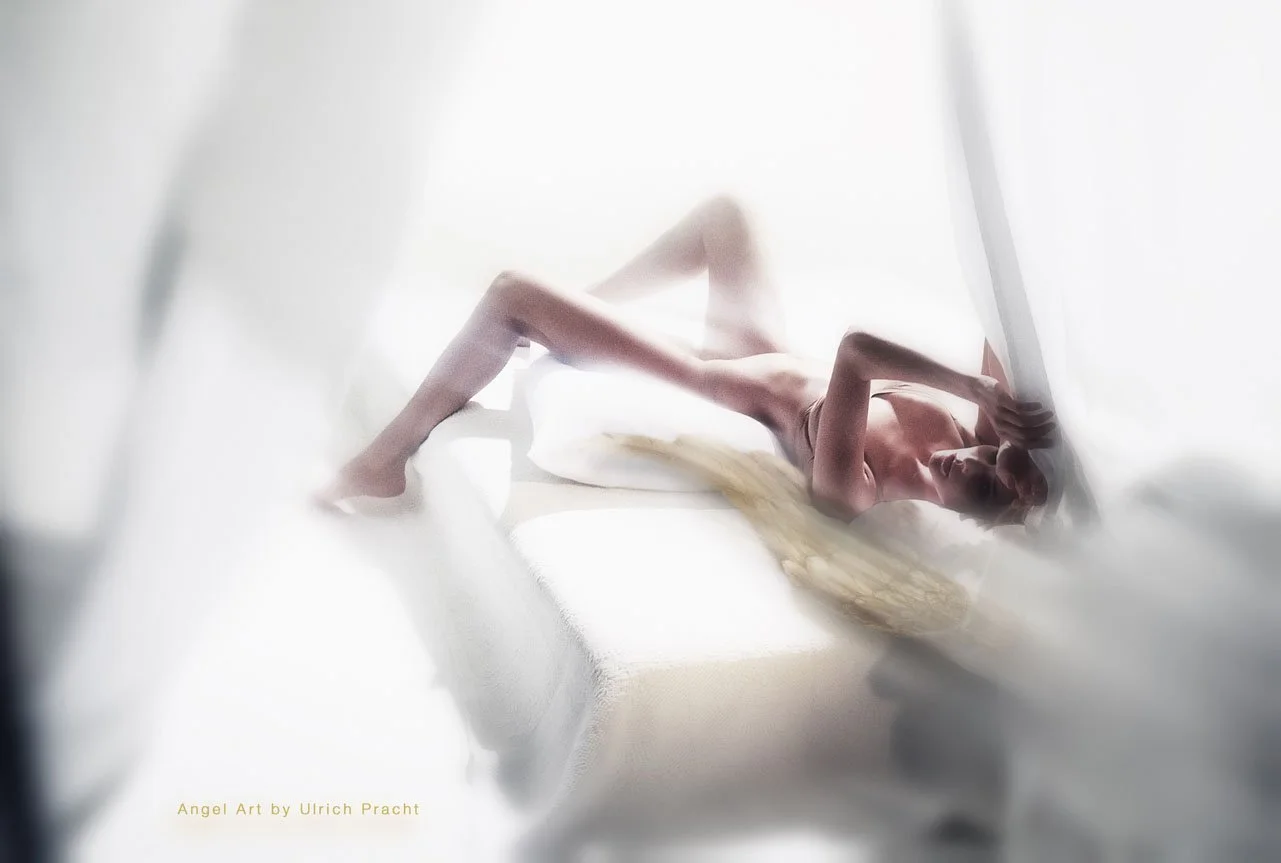
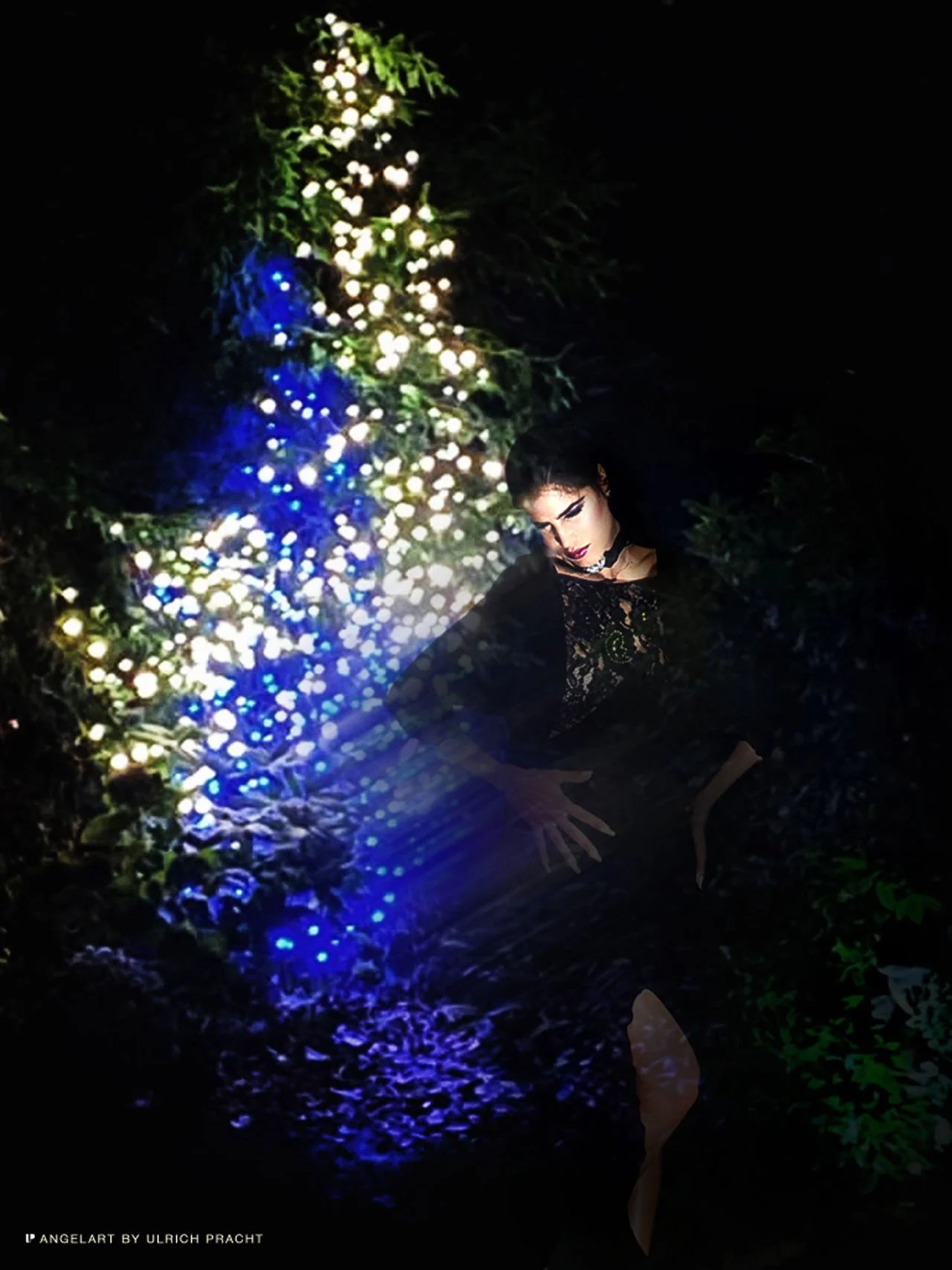
The heavens have always fascinated Ulrich Pracht. Thus, it is only natural that he also concerns himself with the beings that populate them. He conjures up a world of his own—one filled with riddles and mysteries—his very own Sagrada Família, composed of fallen angels. They bear the delicate wings of a Fra Angelico, yet—being half-angel, half-sorceress—they appear simultaneously alluring and terrifying. In Ulrich Pracht’s work, they emerge as a positively blasphemous counter-image to the male archangel. They are angels of seduction—cool, beautiful, aloof. Eve, offering the dark apple. Light and shadow flow together in Ulrich Pracht’s images with meticulous composition; he works ceaselessly to refine his nuanced lighting techniques. In doing so, he once again succeeds in creating a unique fusion of art and commerce—one that, through its tenderly masculine phantasmagoria, gives flight to the viewer’s imagination regarding that mythical creature: Woman.